
Hands On Chemistry & Physics Packets
Are you looking for hands on experiments and learning activities made to engage upper elementary and early middle grade students? Do you desire to reinforce science vocabulary as part of your students’ experiments? Do you want to encourage independence with step by step written experiment instructions?
Description
This resource, Hands On Chemistry & Physics Packets, contains all of that and more!
Packed with over 90 activities within 14 experiment packets,
your 4th – 7th grade students can explore the following science topics…
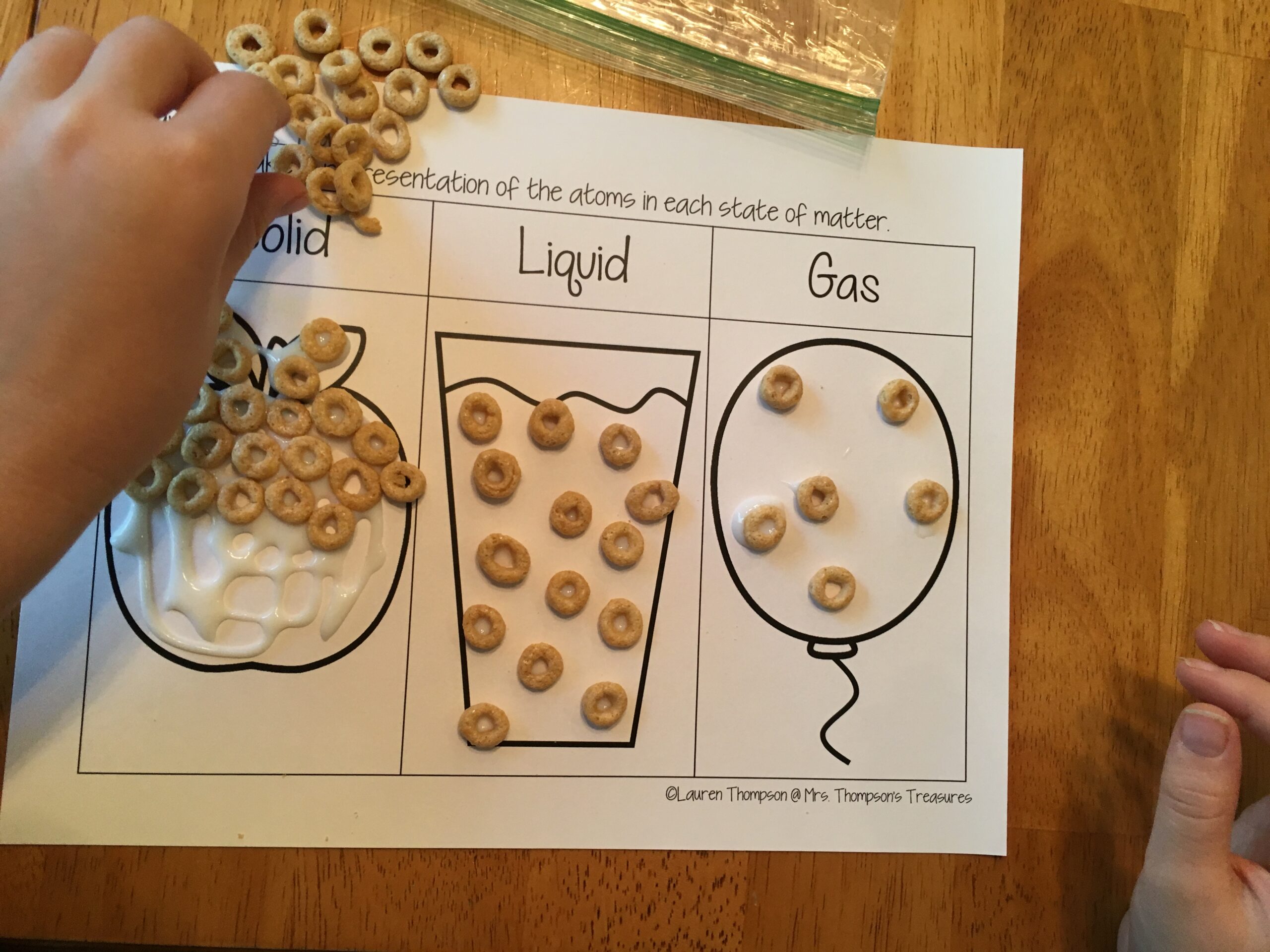
Explore the States and Properties of Matter! This resource includes 7 experiment recording sheets, 2 cut and sort activities, 3 booklets, and 2 worksheets.
- States of Matter Tab Booklet (booklet)
- States of Matter Sort (Cut & Sort – 3 States of Matter)
- Identifying the States of Matter (Worksheet – solid, liquid, gas within a picture)
- Root Beer Float (experiment recording sheet)
- Changing States of Matter Skinny Booklet (booklet)
- Water Cycle in a Jar (experiment recording sheet)
- Water Cycle Notes
- The Water Cycle Fold-able (fold-able booklet)
- How Can We Tell? (Worksheet – Observable vs Measurable Properties)
- My Mystery Matter Bag (experiment recording sheet)
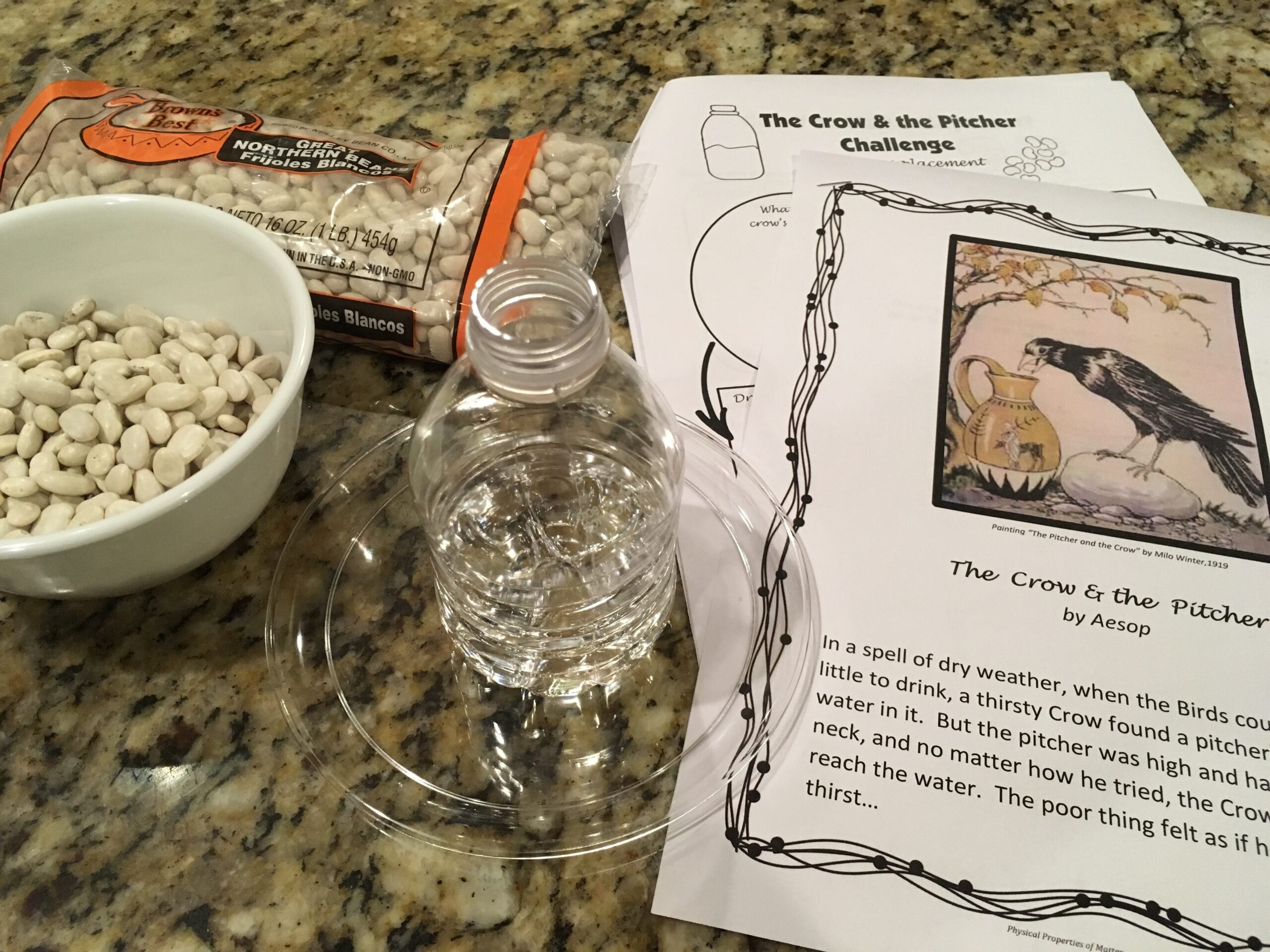
- The Crow & the Pitcher Challenge (experiment recording sheet)
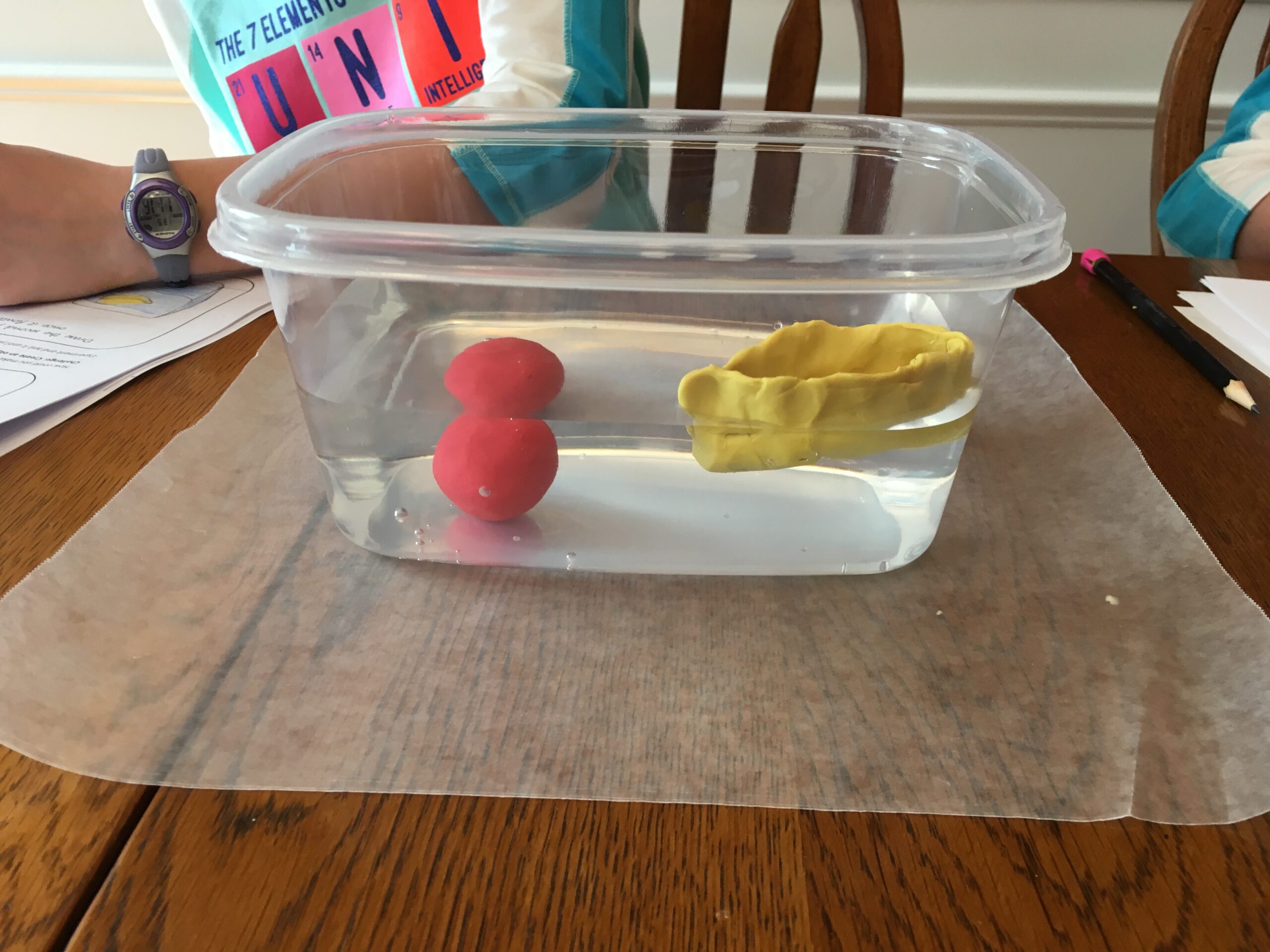
- Can You Make Clay Float? (experiment recording sheet)
- Coke Float (experiment recording sheet)
- Lively Lava Lamps (experiment recording sheet)
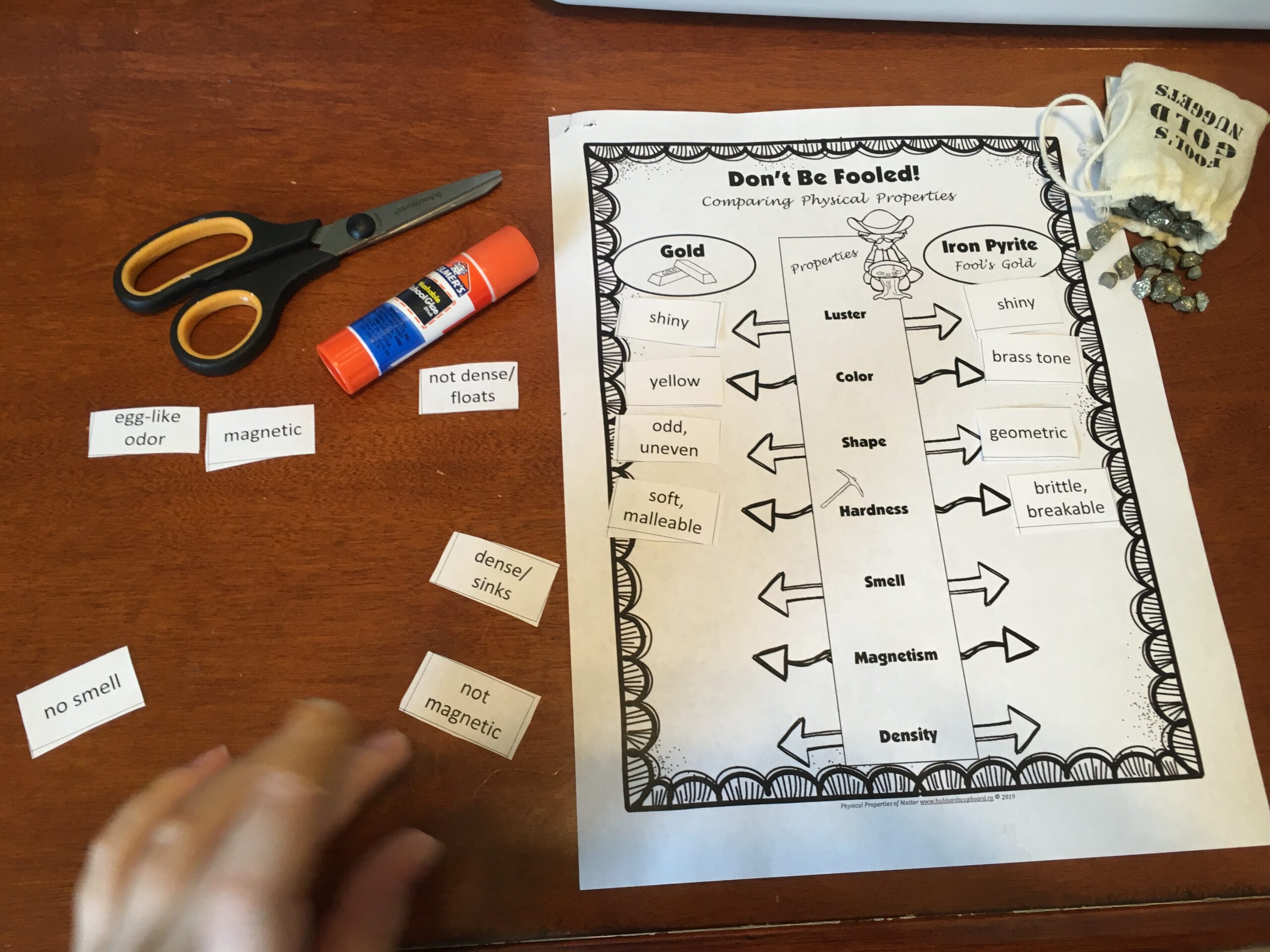
- Don’t Be Fooled! (Cut & Sort – Properties of ‘Gold’ vs ‘Iron Pyrite’)
An Introduction to Atoms and Elements
Introduce your students to Atoms and Elements!
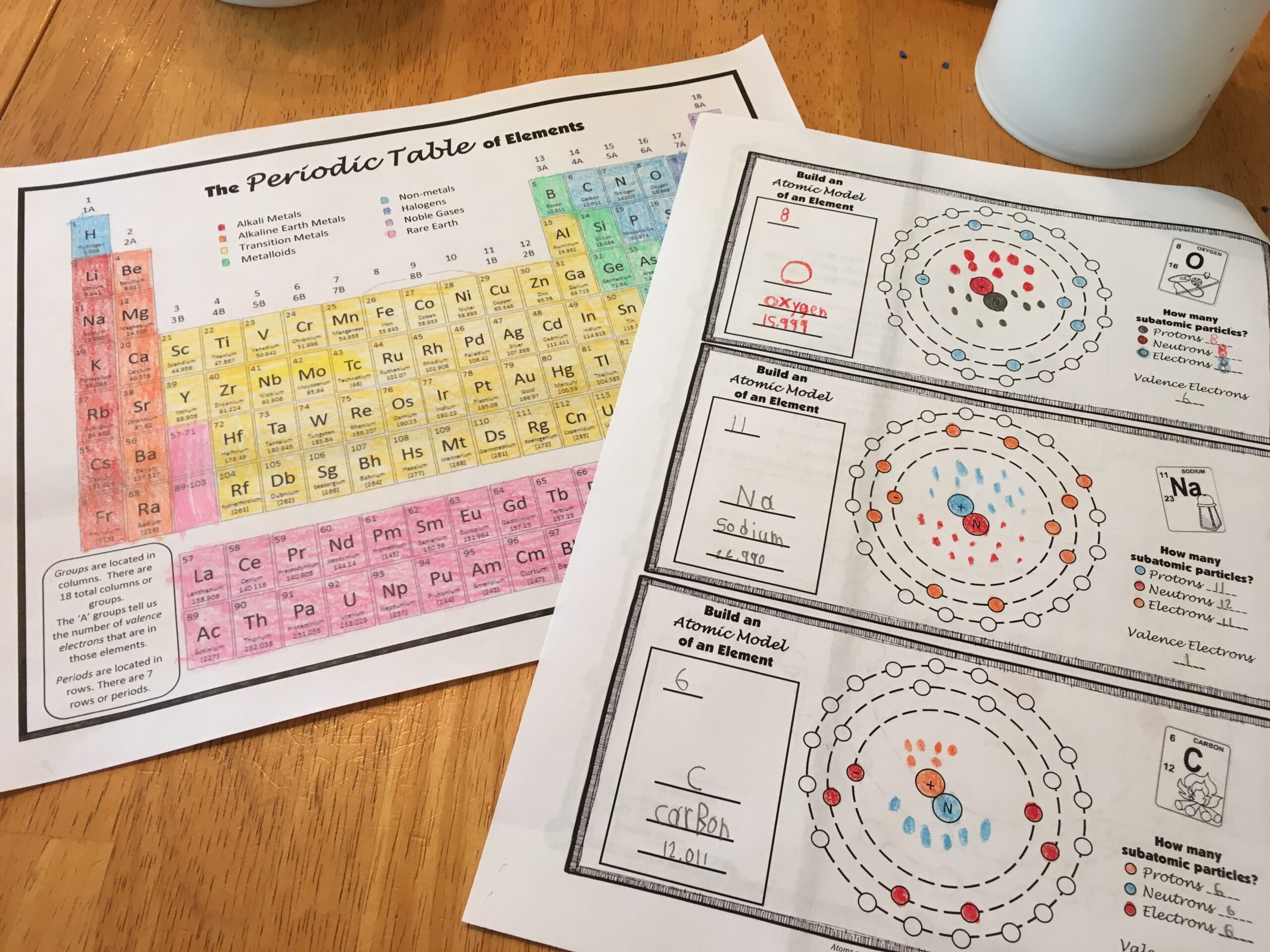
- Atoms & Elements Atomic Model
- Build a Model of an Element
- Periodic Table
- Build a Model of an Element – larger
- Combining Atoms (Molecules and Compounds, 2 versions)
- Helpful Definitions
Physical & Chemical Changes (including Polymers and Acids & Bases)

Introduce your students to Physical and Chemical Changes, Polymers, and Acids & Bases! Included are the following hands on activities…
- Edible Polymer
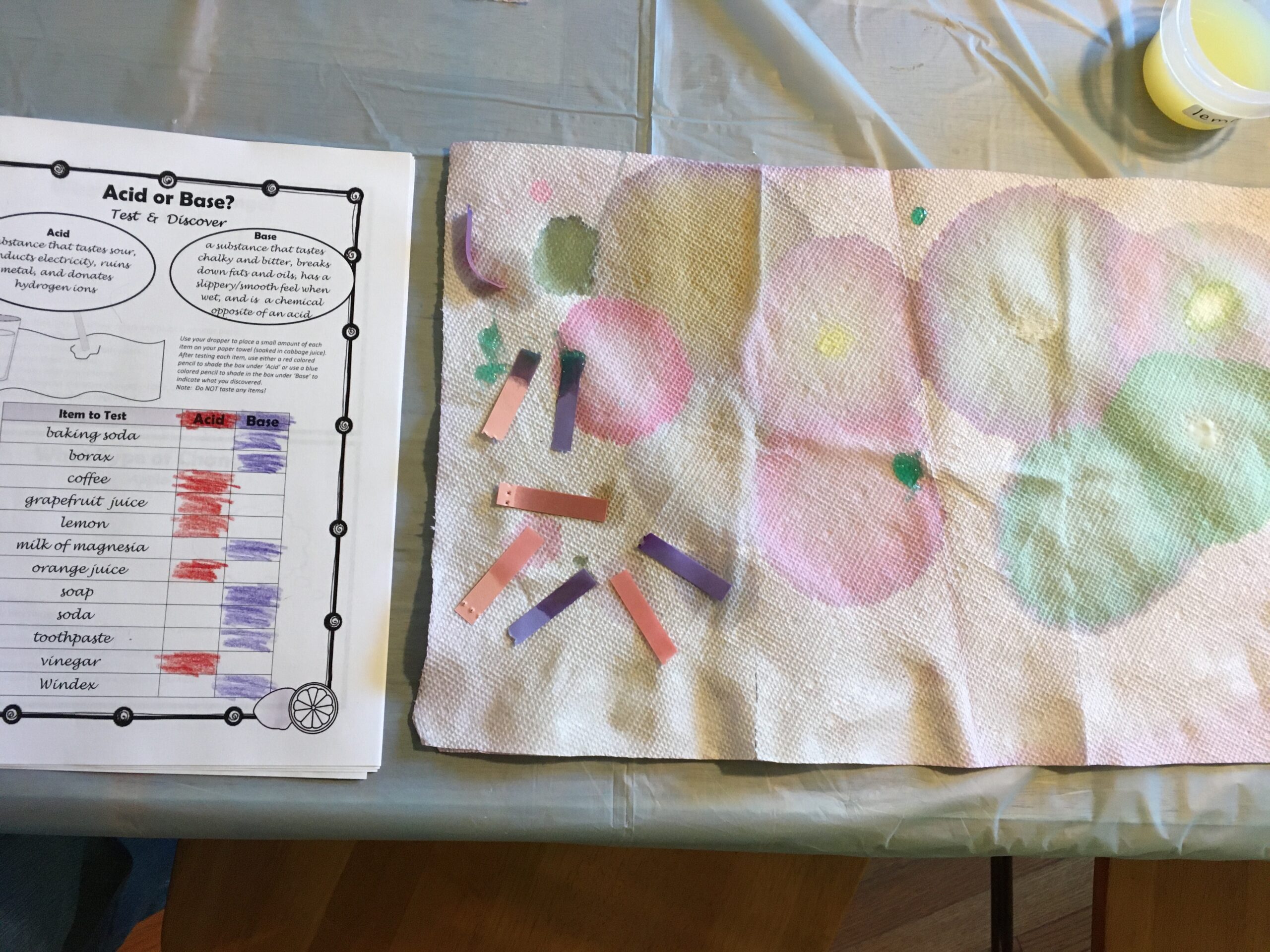
- Acid or Base?
- Physical & Chemical Changes Cut and Paste
- Physical & Chemical Change Experiments – What type of change is it?
(simple experiments with playdough, apple, milk & vinegar, Styrofoam & nail polish remover, and Mentos) - Physical vs Chemical Change Sort
Introduce your students to the world of homogeneous and heterogeneous mixtures by using the following activities!
- Cookies (introduction to mixtures)
- Trail Mix (heterogeneous mixture)
- Lemonade (homogeneous mixture – solution; diluted vs concentrated solution)
- Amazing Mixtures (helpful definitions)
- What Kind of Mixture? Experiment & Find Out
- What Kind of Mixture? Sort It Out
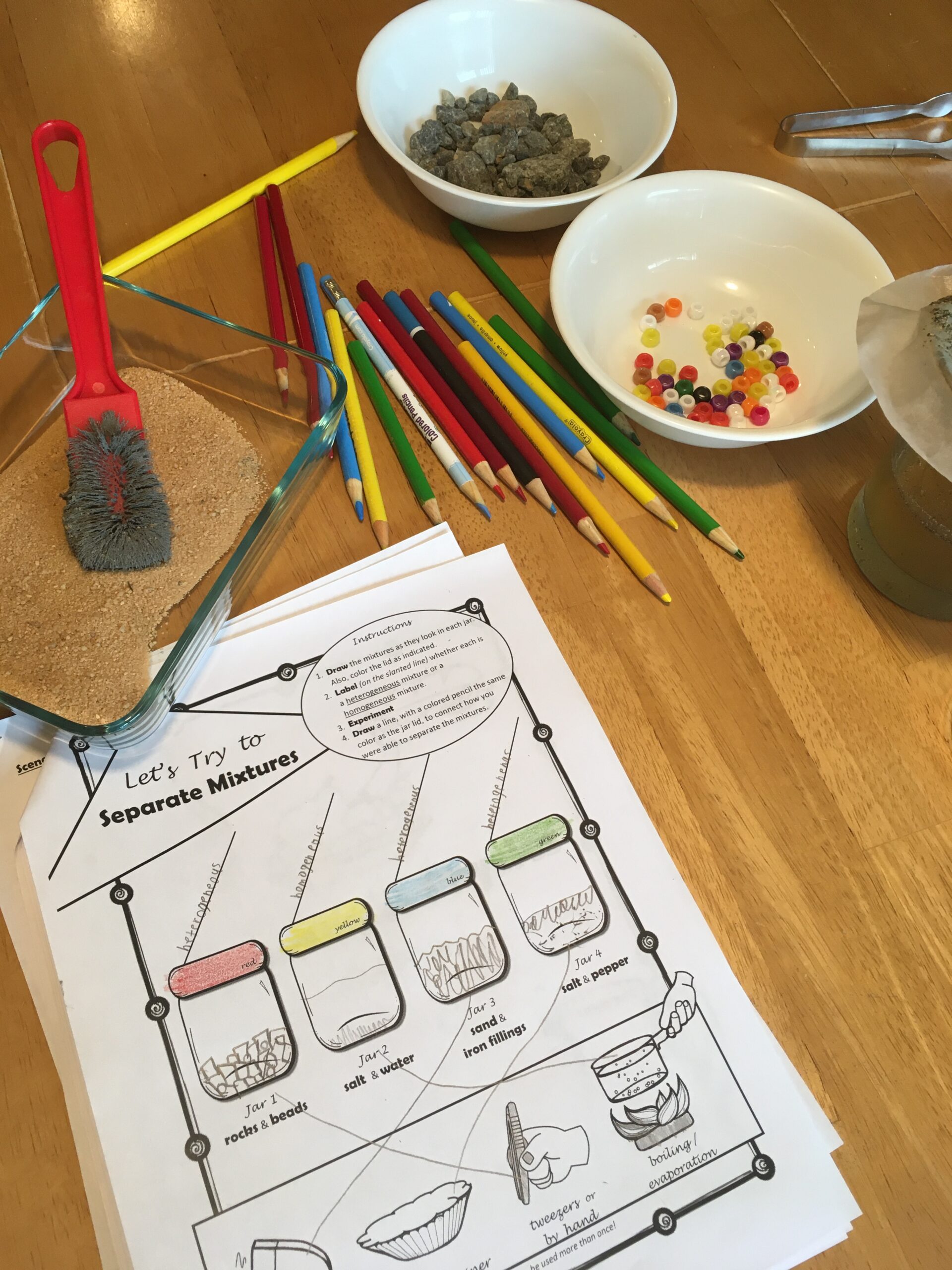
- Let’s Try to Separate Mixtures

Let your students have fun while learning about Newton’s three laws of motion!
This resource includes 4 hands on experiments…
- Law 1: Inertia Towers
Students stack blocks and cards and then cups and cards, attempting to pull the cards from the stack to demonstrate inertia and the first law of motion. - Law 2: Accelerating Pom-Poms
Students try to blow a pom-pom ball from two lengths of tubes in order to learn about acceleration. - Law 2: Cars
Students test a toy car down a ramp, increasing the mass each time, to demonstrate the second law of motion. - Law 3: Balloon Races
Students create balloon racers and test them to demonstrate the third law of motion – how every action has an equal and opposite reaction.
Let your students experience these 3 hands on experiments to explore surface and air friction!
- Friction on the Track (Surface Friction)
Students test 4 different track surfaces to see which has the least / most amount of friction. - Jiggly Jello (Decreasing Friction)
Students move cubes of Jello (coated with different substances) from one bowl to another in order to explore lubricants and friction. - Falling Parachutes (Exploring Air Friction)
Students perform 6 different tests to demonstrate the effect of air friction.
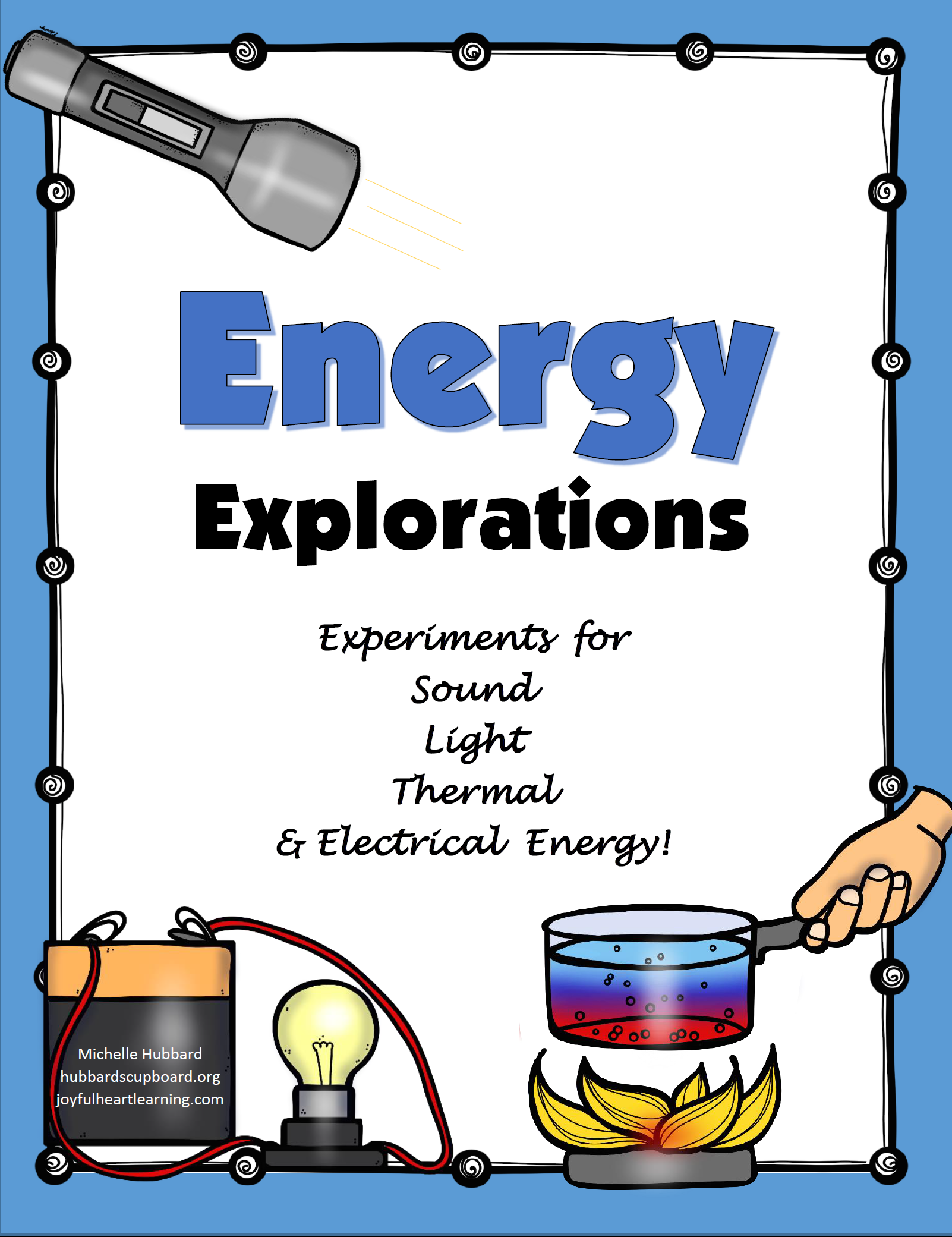
Get ready to explore energy with your students with these 5 packets of experiments! Topics include an introduction to energy, sound energy, light energy, thermal energy, and electrical energy!
The following experiments and activities are included in this resource…
- Kinds of Energy (Potential and Kinetic Energy Sort)
- Exploding Watermelon Challenge (Potential and Kinetic Energy)
- Marble Run Challenge (Gravitational Energy)
- Fossil Fuels (The Formation of Fossil Fuel)
- Oil Spill Challenge
- Water Wheel Challenge (Exploring renewable Energy)
- Seeing Sound (Sound Waves)
- How Well Can You Hear That Sound? (Conductors of Sound)
- It’s All in the Wave (Amplitude & Frequency)
- Let the Light Through! (Opaque, Transparent, and Translucent Objects)
- Casting a Shadow
- My Shadow
- Bouncing & Bending Light (Reflection & Refraction)
- Getting Hotter! (Heat Sources & Heat Sink)
- Thermal Energy Hot Cocoa (Radiation, Convection, & Conduction)
- Radiating Heat (Absorbing Heat from the Sun)
- Rising & Falling Air (Convection of Air)
- Heat Moves (Conduction of Heat)
- Keep the Heat In (Finding the Best Insulators)
- Measuring the Heat (Building & Testing a Thermometer)
- Put It Together (Creating a Simple Circuit)
- Flowing Current (Conductors of Electricity)
- An Electric Solution (Ionic Solutions)
- Let’s Switch it Up (Adding a Switch)
- A Series of Tests (Constructing a Series Circuit)
- Diagram of a Series Circuit
- Working in Parallel (Constructing a Parallel Circuit)
- Diagram of a Parallel Circuit
- Series or Parallel Circuit
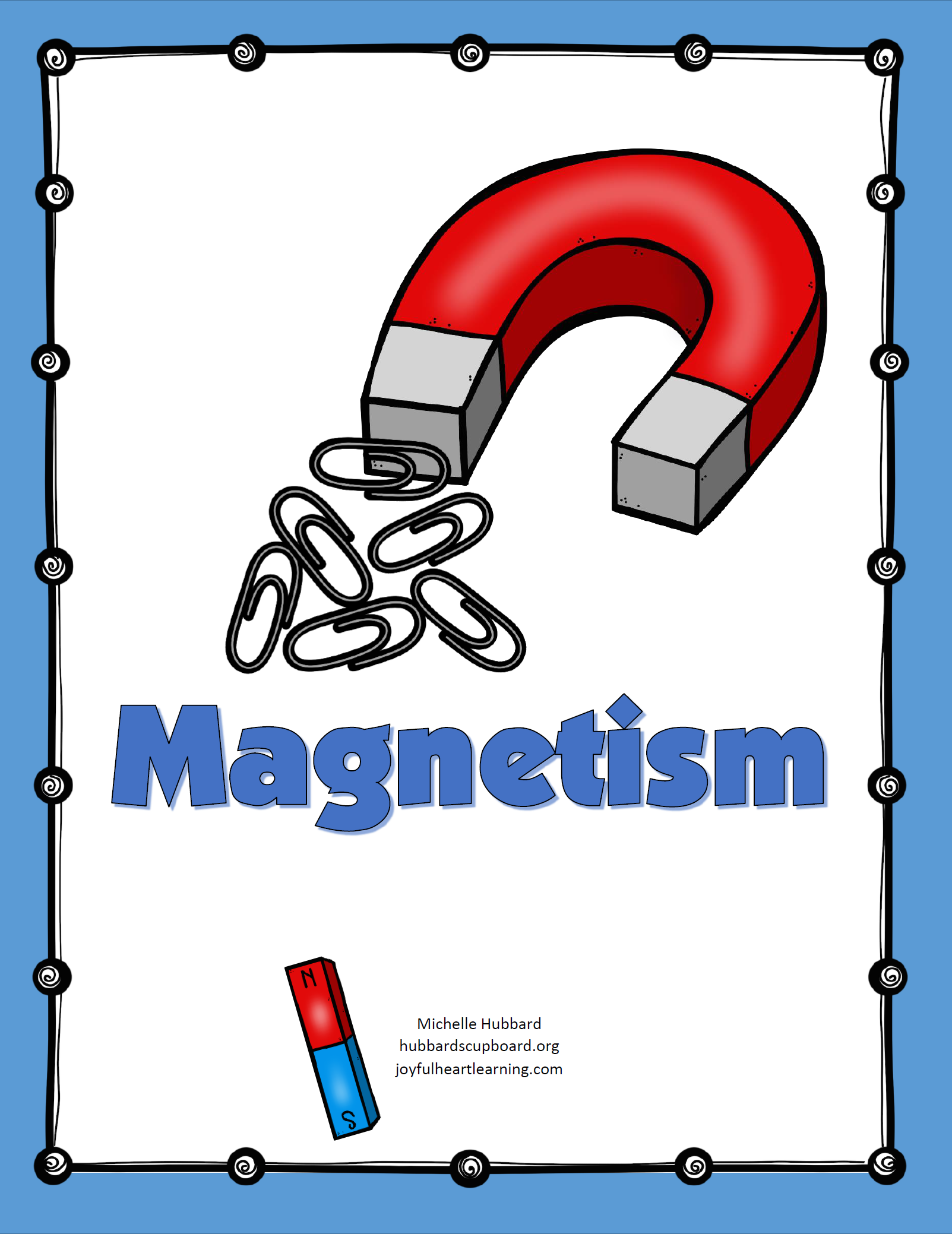
Let students explore the properties, strength, and reactions of magnets as they perform the following experiments found within this resource…
- How Magnets React (The Poles of a Magnet)
Students explore how bar magnets respond when near each other. - A Show of Lines (Exploring Magnetic Fields)
Students use magnets and iron shavings to attempt to see the invisible magnetic field lines. - Letting Magnets Work for You (Making a Magnet Car)
Students use what they’ve learned about the attraction and repulsion of magnets to make a toy car move. - What’s the Attraction? (Properties of Magnetic Items)
Students test a variety of materials to determine the common properties of magnetic items. - Magnetic Moments (Creating a Magnet)
Students review ‘domains’ and magnetize a nail. - Always Look North (Making a Compass)
Students create their own compass. - Electricity and Magnets (Building an Electromagnet)
Students construct and experiment with an electromagnet.
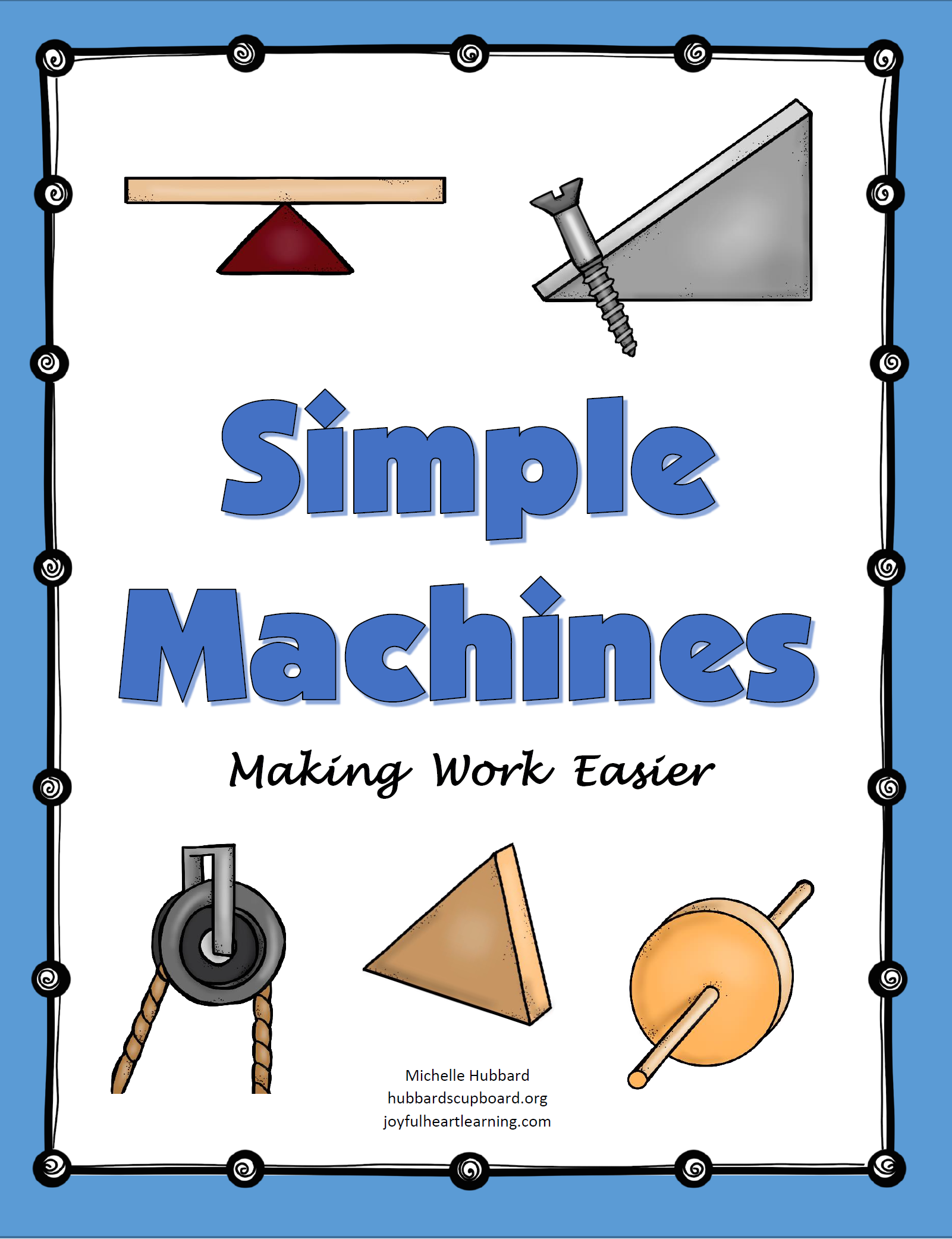
Introduce students to simple machines and let them experience how each type makes work easier! This resource contains 10 hands on experiments and learning activities made to engage upper elementary and early middle grade students.
- Work Takes Effort! (Introducing Simple Machines)
- Moving Up (Inclined Planes)
Students experiment with three different lengths and angles of ramps and learn how the length of an inclined plane affects the amount of force, time, and distance. - Twisting Planes (Screws)
Students wrap a triangular piece of paper around a pencil to get a better visual for how a screw is just a twisting plane. They also build and experiment moving water with an Archimedes screw. - Widening the Gap (Wedges)
Students experiment with a nail and a rivet, comparing the two – learning how a wedge works to push things apart. - Lift That Load (1st Class Levers)
Students are introduced to a basic first class lever and learn the terminology associated with levers. - Switching Up the Lever (1st Class Levers)
Students experiment with a first class lever and learn how the distance between the load and the fulcrum affects the amount of effort needed. - Three Types of Levers (1st, 2nd, and 3rd Class Levers)
In order to learn about the differences among the three types of levers, students use one of each type and identify the location of the fulcrum, load, and effort for each. - Pulling Up (Single-Pulley Systems)
Students make and use a single pulley system. - Balloon Cars (Wheels & Axles)
Students construct a balloon car, test it, and then draw and label the wheels and axles. - Simple Machines Layer Booklet
Students cut apart pictures and definitions and then sort and glue them according to which type of simple machine is being described. Students then cut apart the pages and staple them together to form a booklet.
Purchase through this store!
Hands On Chemistry & Physics Experiment Packets


Reviews
“Great resource it support student engagement and success. “
“My students enjoyed the hands on resources and the different ideas it presented.”
“My ELL students found this resources extremely useful and engaging.”
Atoms & Elements: “This is a great resource to help me in teaching the periodic table. Thanks for all your hard work.”
Exploring Friction: “Students created this at home and created a flip grid to demonstrate how it worked!”
Energy Explorations: “Great review for learning about the types of energy”